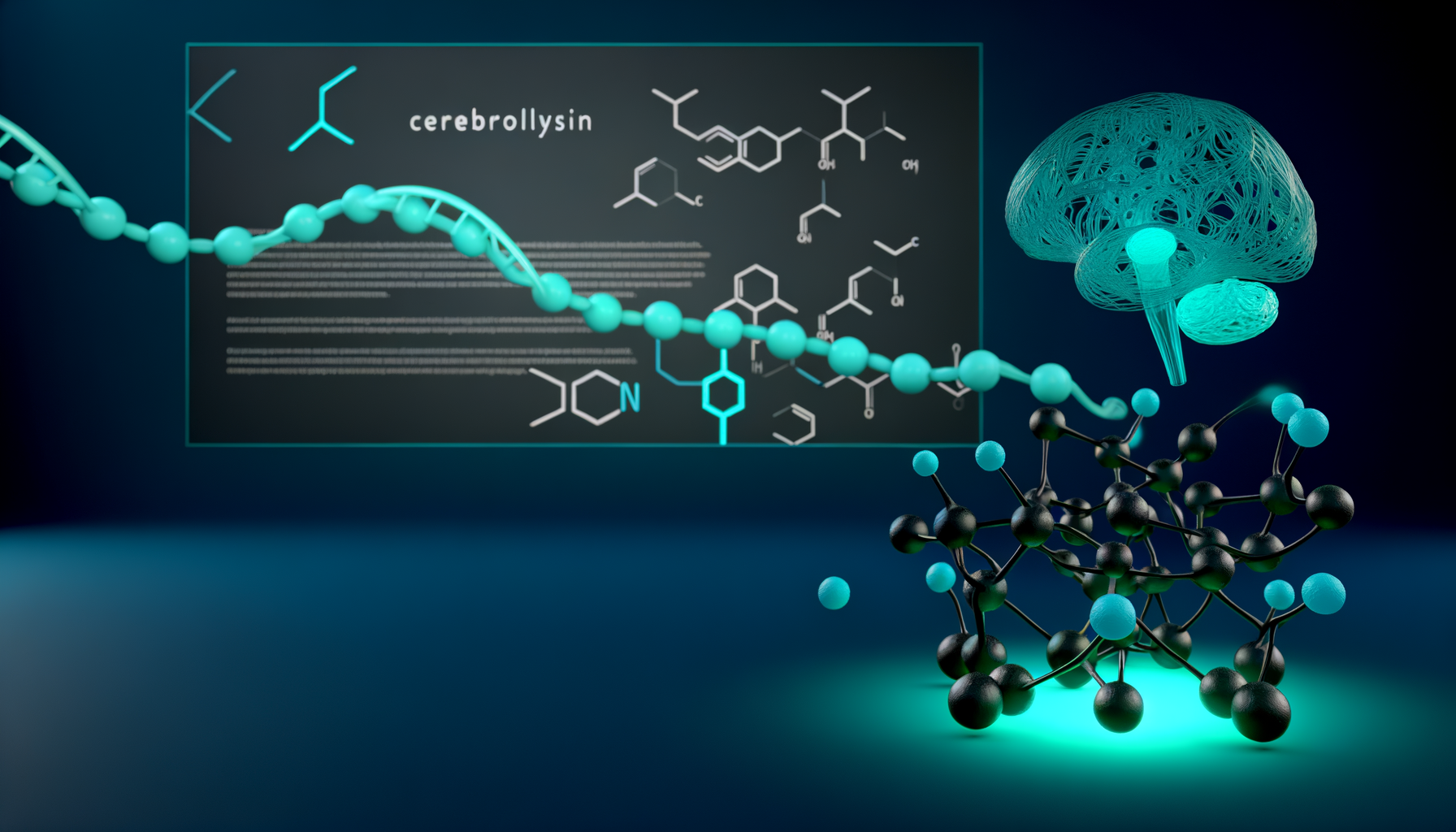
Complete Guide to Cerebrolysin: Benefits, Uses, and Research
Explore the comprehensive benefits and applications of Cerebrolysin, a neuropeptide known for its cognitive-enhancing properties. Learn about its mechanisms, optimal dosages, and scientific evidence supporting its use.
Complete Guide to Cerebrolysin
Cerebrolysin is a neuropeptide that has garnered attention for its potential cognitive and neuroprotective benefits. This comprehensive guide delves into the scientific evidence, mechanisms, dosage, and applications of Cerebrolysin, offering a thorough overview for anyone interested in its therapeutic potential.
What is Cerebrolysin?
Cerebrolysin is a complex mixture of peptides derived from porcine brain proteins. Known for its potential to enhance cognitive function and provide neuroprotection, Cerebrolysin has been the subject of numerous studies focusing on its effect on various neurological conditions.
What is Cerebrolysin? A neuropeptide derived from porcine brain proteins, used for cognitive enhancement and neuroprotection.
Understanding Cerebrolysin
Imagine your brain as a bustling city. Neurons are the busy streets that carry information back and forth. Cerebrolysin acts like a maintenance crew, ensuring these pathways remain clear and functional. By supporting neuronal survival and enhancing synaptic plasticity, Cerebrolysin helps keep the brain's city running smoothly.
Mechanisms of Action
Cerebrolysin's mechanisms are multi-faceted. It modulates neurotrophic activity, enhances synaptic plasticity, and reduces oxidative stress. These actions contribute to its neuroprotective effects, addressing both the symptoms and underlying causes of neurological decline.
What is Neurotrophic Activity? The process of supporting the growth and survival of neurons.
How Cerebrolysin Works
Consider Cerebrolysin a gardener for your brain. It nurtures the growth and health of your neuronal "plants" by providing essential nutrients and protection from "weeds" like oxidative stress. This not only improves brain function but also guards against further damage.
Researchers have demonstrated Cerebrolysin's impact on neurotransmitter regulation, which plays a crucial role in maintaining cognitive functions [1]. By enhancing neuronal communication, it aids in better memory, learning, and even mood regulation.
Clinical Applications and Benefits
Cerebrolysin is primarily used in managing neurodegenerative diseases such as Alzheimer's [3]. Patients have reported improvements in cognitive function, memory, and learning capabilities. The peptide's benefits extend to post-stroke recovery and traumatic brain injury rehabilitation.
What are Neurodegenerative Diseases? Disorders characterized by progressive nerve cell loss, such as Alzheimer's and Parkinson's disease.
Real-World Impact
Picture a stroke survivor struggling with memory and mobility. Cerebrolysin acts like a coach, guiding the brain's recovery process, helping regain lost functions, and improving quality of life. Studies have shown significant improvements in both cognitive and motor functions post-treatment [2].
Beyond Alzheimer's, Cerebrolysin has shown promise in conditions like vascular dementia, where it helps restore cognitive function by improving blood flow and neuronal health [4]. This versatility makes it a valuable tool in the arsenal against aging-related cognitive decline.
Dosage and Administration
The typical dosage of Cerebrolysin ranges from 5 to 30 mL per day, administered via intravenous infusion. Treatment duration is often tailored to the individual's condition, spanning from 10 to 30 days. Following medical guidance is crucial to achieve optimal results.
What is Synaptic Plasticity? The ability of synapses to strengthen or weaken over time, essential for learning and memory.
Dosage Details
Think of Cerebrolysin as a bespoke suit, tailored to fit the individual needs of each patient. Medical professionals carefully determine the dosage and duration based on specific conditions, ensuring the best possible outcomes.
A table of typical dosage schedules could act as a quick reference for healthcare providers, ensuring that each patient's therapy is personalized. Always consult your healthcare provider to determine the appropriate course of treatment.
Safety and Potential Interactions
Cerebrolysin is generally well-tolerated, with mild side effects such as dizziness or headache. However, potential interactions with other neuroactive drugs require careful medical supervision during treatment.
What is Oxidative Stress? An imbalance between free radicals and antioxidants, leading to cell and tissue damage.
Ensuring Safe Use
Imagine Cerebrolysin as a specialized tool—a hammer in the toolbox of brain health. Used correctly, it can build and repair, but like any tool, it needs to be handled with care. Always discuss with your doctor about any other medications you are taking to avoid possible drug interactions.
The safety profile of Cerebrolysin is robust, yet individualized monitoring remains essential. This ensures that side effects are minimal, and the full therapeutic benefits can be realized.
Current Research and Future Directions
Research on Cerebrolysin continues to evolve, with studies exploring its role in neuroplasticity and potential applications in age-related cognitive decline. Emerging data suggest promising avenues for future therapeutic uses.
Looking Ahead
Consider the brain as an ever-evolving ecosystem, with Cerebrolysin acting as an environmental steward. Observations from ongoing and future studies will guide the development of new therapeutic strategies, potentially expanding its applications in treating various neurological disorders.
Recent investigations have focused on its potential role in enhancing synaptic plasticity, which is crucial for learning and memory [5]. As research progresses, Cerebrolysin may unlock new doors in understanding and managing cognitive health.
Frequently Asked Questions
How does Cerebrolysin work?
Cerebrolysin enhances neurotrophic activity, synaptic plasticity, and reduces oxidative stress, supporting neuronal survival and cognitive function.
What are the benefits of Cerebrolysin?
Cerebrolysin is known to improve cognitive function, memory, and learning, particularly in neurodegenerative conditions like Alzheimer's disease.
What is the recommended dosage of Cerebrolysin?
The typical dosage ranges from 5 to 30 mL per day, administered intravenously, with treatment duration tailored to the condition.
What are the side effects of Cerebrolysin?
Cerebrolysin is generally well-tolerated, with mild side effects such as dizziness and headaches. Medical supervision is advised.
Is Cerebrolysin safe for long-term use?
Long-term safety of Cerebrolysin is supported by research, but individual monitoring by healthcare professionals is recommended.
Can Cerebrolysin be used in post-stroke recovery?
Yes, Cerebrolysin has been shown to aid in recovery by improving cognitive and motor functions post-stroke.
Does Cerebrolysin interact with other medications?
Cerebrolysin may interact with neuroactive drugs, so it's important to consult with a healthcare provider before use.
What are the clinical applications of Cerebrolysin?
Applications include treatment for Alzheimer's disease, vascular dementia, and cognitive impairment due to stroke.
How is Cerebrolysin administered?
Cerebrolysin is administered via intravenous infusion, typically in a clinical setting under medical supervision.
What research supports the use of Cerebrolysin?
Numerous studies, including those published in Journal of Neural Transmission, support its efficacy in cognitive enhancement and neuroprotection.
Key Takeaways
- Cerebrolysin enhances neurotrophic activity, supporting brain health.
- Typical Cerebrolysin dosage ranges from 5 to 30 mL per day.
- Cerebrolysin is derived from porcine brain proteins.
- It is used in the treatment of Alzheimer's and cognitive impairment.
- Research supports Cerebrolysin's neuroprotective properties.
- Cerebrolysin may interact with other neuroactive drugs.
- It is generally well-tolerated with mild side effects.
- Cerebrolysin is administered via intravenous infusion.
To learn more about related topics, you might find these articles interesting:
- Complete Guide to Cartalax: Benefits, Uses, and Research
- Complete Guide to Cardiogen: Mechanisms and Benefits
- Understanding Bronchogen's Mechanism of Action: A Detailed Guide
Cerebrolysin stands as a beacon of hope in the realm of cognitive health, offering a powerful tool for enhancing mental function and protecting the brain against the ravages of neurodegenerative diseases. With ongoing research and a growing body of evidence, it promises to remain at the forefront of neurological therapeutics.
References
- 1.Ziganshina LE, Abakumova T, Nurkhametova D. Cerebrolysin for acute ischaemic stroke. The Cochrane database of systematic reviews, 2023PubMed
- 2.Cui S, Chen N, Yang M. Cerebrolysin for vascular dementia. The Cochrane database of systematic reviews, 2019PubMed
- 3.Ziganshina LE, Abakumova T, Hoyle CH. Cerebrolysin for acute ischaemic stroke. The Cochrane database of systematic reviews, 2020PubMed
- 4.Ziganshina LE, Abakumova T, Vernay L.
Have questions about this topic?
Ask RT, our AI research assistant, for detailed explanations and personalised information.
Ask RT Assistant